


Strategic Brand Clarity Beyond AI Shortcuts: From Disposable Design to Enduring Equity

By Rebecca Rausch, Neon Lizard Creative
For more than 30 years, I’ve worked at the intersection of marketing, design, and business growth. I’ve watched brands rise, stall, and quietly disappear. The pattern is consistent: brands that last are built with intention, clarity, and human understanding. Brands that chase shortcuts rarely do.
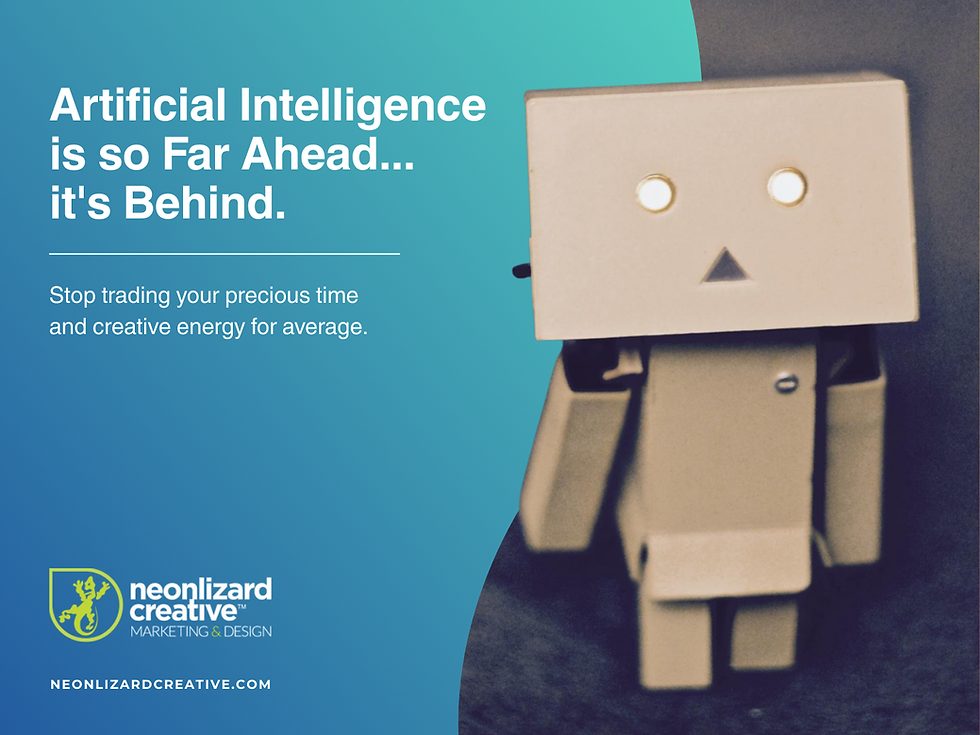
Today, artificial intelligence sits at the center of the branding conversation. AI logo generators, writing tools, and automated brand kits promise speed, savings, and instant polish. And to be clear, AI is not the enemy. Used well, it can be a powerful tool.
But quality branding that stands the test of time is not AI-generated.
Why? Because branding is not a file. It’s not a prompt. And it’s certainly not just a logo.
Branding Is the Business Essence, Not an Output
Entrepreneurs crossing the $1M mark understand one thing viscerally: perception compounds. Brand equity is king. Your brand’s visual language, voice, and consistency shape how prospects evaluate risk, value, and credibility long before a conversation happens.
Brand design, branding, and marketing are not aesthetic exercises. They are strategic systems that influence trust, pricing power, customer loyalty, internal alignment, and long-term growth efficiency.
When branding is weak or generic, the cost shows up everywhere—lower conversion rates, longer sales cycles, inconsistent messaging, internal confusion, and repeated attempts to “fix” what never worked in the first place. What feels “good enough for now” often becomes a drag on momentum, forcing businesses to spend more time, money, and effort compensating for unclear positioning than they would have if they had invested correctly from the start. Doing branding fast usually means doing it twice.
Where AI Helps—and Where It Quietly Fails
AI excels at pattern recognition. It can scan massive datasets, identify visual trends, and generate outputs that feel familiar and polished.
That strength is also its limitation.
AI does not originate meaning. It assembles from what already exists—drawing from publicly available styles, symbols, and structures. The result is a design that looks acceptable, sometimes even impressive, but rarely distinctive.
The outcome is branding that blends in rather than standing out.
That may be sufficient for a side project or a short-term initiative. It does not work for businesses that need to clearly differentiate, defend margins, and build recognition over time.
Branding Requires Empathy and Understanding, Not Just Efficiency
Human-centered branding is rooted in nuance:
Why does your audience choose you over a competitor?
What they fear, value, and aspire to
The language they trust and the signals they subconsciously read
AI can simulate tone. It cannot read context.
It doesn’t sit in stakeholder meetings. It doesn’t hear hesitation in a prospect’s voice. It doesn’t understand internal politics, category maturity, or emotional friction points.
Those insights are where real brand power lives.
The 4 Pillars of Enduring Brand Design
Brands that endure are built on four foundational pillars:
Strategic Clarity
Distinctive Identity
Consistent Expression
Human Resonance
Human resonance is created when a brand feels like it understands you—through language, tone, pacing, and emotional intelligence. This is where human-led branding consistently outperforms every shortcut.
When AI Belongs in the Process
Rejecting AI entirely is as shortsighted as relying on it completely.
Used correctly, AI can speed up exploratory research, support early-stage ideation, and assist with internal drafts or variations. But it should never be the decision-maker.
AI is a tool. Strategy is a discipline.

Practical Takeaways You Can Apply Now
If you’re questioning whether your current brand is helping or hindering growth, start here:
Ask Neon Lizard Creative to audit your brand for consistency across all touchpoints
Determine whether your messaging clearly differentiates you in a single sentence
Evaluate whether your visuals signal the level at which you are actually operating
Identify where you’re compensating for weak branding with extra effort
Education is the first step to better decisions.
If you want a clearer framework for evaluating and strengthening your brand, download our Brand Strategy Workbook. It’s designed to help you think like a brand strategist, not a logo shopper.
And if you want a deeper exploration of how brands connect emotionally and visually, I also offer a free copy of my book, Catch the Eye. Grab the Heart. It’s written for business owners who understand that attention is earned, but loyalty is built.
The Bottom Line
AI will continue to improve. Tools will get faster, cheaper, and more impressive.
What won’t change is this: brands that matter are built with human insight, strategic intent, and long-term thinking.
Your brand is one of your most critical business assets. It deserves more than a shortcut.
Rebecca Rausch
Founder, Neon Lizard Creative


Comments